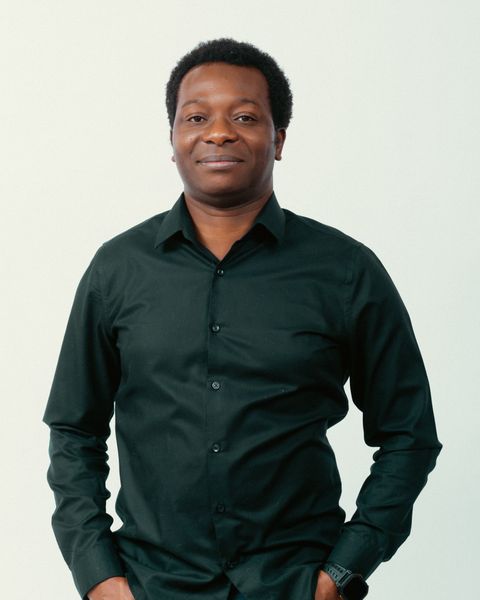
Before Canada
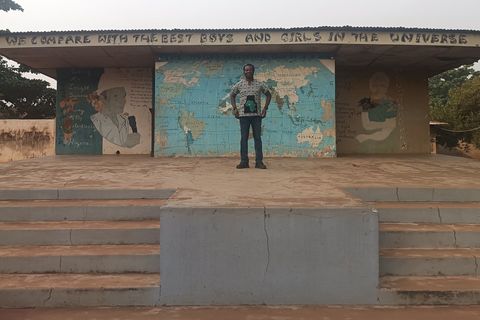
On the assembly ground of our hostel at Mayflower School in Ikenne, a sign read: We compare with the best boys and girls in the universe. It's still there.
Mayflower woke us at 5:15, ran our days by a bell, and sent us into the woods for self-reliance nights with a little gari and as much water as we could carry. We sang that we could become whatever we chose to be. I believed it then. I still do. Our founder, Dr. Tai Solarin, was Uncle Tai to us. His wife, Sheila, was simply Madam. She gave me books to read and new words to hunt down, then made me build sentences with each one. Much of how I write today, I owe to her.
My father wanted a doctor. I couldn't get into medicine, and honestly, I never wanted it. I studied biochemistry instead, until a blunt professor told me that without the means to go abroad, my only path was a lecture hall. So I changed careers. I worked three months without pay at an IT firm in Lagos just to learn, then earned a postgraduate diploma in computer science at the University of Lagos.
Globacom turned me down more than once. So I studied how the company was organised, found the team my skills fit, and applied for a job they hadn't advertised. They called. I still teach what that taught me: learn to tell your story.
Between 2009 and 2012 I was the manager of provisioning and resource management for Nigeria, Ghana and Benin. When a complex network change touched provisioning, it didn't move forward without my clearance. But what I'm proudest of is my team. I recruited many of them from customer care when others doubted they could learn. I'm glad the people others doubted ended up running the show. They grew quickly, and we built a great relationship. Some still send me birthday wishes to this day.
Then a dream I'd carried since I was 16 finally came through. I was moving to Canada.
Arriving in 2012
We landed in Calgary on 7 September 2012. It was sunny, and we thought our cardigans were enough. They weren't.
The customs officers welcomed us as if we were treasure. I wasn't on holiday; I was here to stay, and it felt like a dream. What I wasn't ready for was the quiet. In Lagos, your neighbours know you before the boxes are unpacked. Here I could live beside someone for months and not know their name.
The plan was simple: I would start work straight away, and my wife would go back to school. Instead, there were crickets. I applied for the work I had done for years and heard nothing. Only call centres called back. Then someone at a workshop told me to take my country of origin off my resume and keep everything else. I did, and the callbacks started. They stopped again the moment an interviewer asked where my experience was from.
So I took transition jobs: phone surveys, nights at Safeway for $13.23 an hour, and, for two hours before each shift, unloading cargo planes at the same airport where I had landed. And I changed one word on my resume: Manager became Lead. I shrank myself to get access to what I had already earned. It took me fourteen years to change it back.
My confidence went with it. I began to question the experience I'd claimed, and whether I was failing the family I had promised a better life.
Two things brought me back. The first was Momentum. Their staff managed a small loan for me from the Immigrant Access Fund, now Windmill Microlending, but what I remember most is how they treated me. They were glad I was in Canada. They made me feel that I still mattered, and that despite the rough start, my future was still bright. The loan paid for a business analysis course. It taught me nothing new, but it gave me back my confidence, and without that, I wouldn't have survived my first week at Shaw.
The second was the YWCA's Canadian Employment Skills programme. It took me by the hand to Shaw, where I had applied before and heard nothing. They waived the interview. I started as a three-month intern. Four days in, they offered me a full-time job.
It had taken nine months. I still ask why.
Building
I have always built something on the side. In Lagos I ran an online consulting business in the evenings and on weekends. In Calgary I started again in 2014, and in July 2015, on a hunch, I incorporated Mopheth Systems.
Three months later, on my wife's birthday, the company that had headhunted me let 13 of us go. Calgary was in a downturn. People were losing jobs, and some were losing hope. So I picked up the phone, talked the Kahanoff Centre in downtown Calgary into giving us their venue for free, and in early 2016 about 235 people came to Arise Calgary. One of the speakers I invited was from Momentum, and they talked about its self-employment programme. I had organised the conference to help others, but I needed help too. I signed up and started taking my own venture seriously. I had been pushed into the water, and I learned to float.
The Immigrant Life began the same way, from helping. People kept calling me, from Nunavut, from Yellowknife, asking how to get their careers back, and I was telling the same story over and over. So on Canada Day 2018, I recorded the first episode on my laptop and published it, however rough. Over time, listeners asked for a gathering, so I started the Thrive Conference and ran it for three years with volunteers, paying for it myself.
In 2013, nine months after I arrived, the download links for some business analysis ebooks I had bought didn't work. The author, Roxanne Miller, called me herself from the US, on a Sunday night, to fix it. A week later I asked her, a stranger, to be my mentor. She said yes, and for years she poured into me so I could pour into others.
That happened by chance. How many people never get the chance, because nothing connects the right mentor to the right mentee? It's one of the reasons that in 2022 I turned Mopheth toward building Mentorfy. It gives mentoring programmes the structure and predictability that chance can't: matching people who actually fit, wherever they live, less manual work, proof that the investment pays off, and sight of what happens after a pair is matched. A failing mentoring relationship rarely fails loudly. It goes quiet. Mentorfy is built to notice early, so someone can step in.
Today I sit on the boards of Momentum and Windmill Microlending. I didn't apply to either; they invited me. In those rooms I bring the client's view to the table, because I was the client. Years later, at a fundraiser for Windmill, I told the story of Shaw taking a bet on me, not knowing the president of Shaw Business was in the room.
Why I study this now
The success of immigration policy isn't measured by how many people cross the border. It's measured by what happens to them after they land.
I want Canada to move beyond celebrating the arrival of skilled talent and start building the conditions in which that talent can contribute and thrive. I've argued for that for years as an advocate, and I still do.
But advocacy runs on stories, and I learned their limit. A policymaker can hear ten people tell the same story and still ask two fair questions: is this ten people or ten thousand, and is it bad luck or the system? My doctoral research is how I move from saying what's wrong to showing what works, why it works, for whom, and under what conditions. Stories make the case. Evidence moves it forward.
So I went back to school. My doctorate at Royal Roads University lets me treat a stubborn problem as a system: touch one part, and unless you understand how the parts connect, the problem simply moves somewhere else. Research lets me test what works, and come to the table with solutions, not only criticism.
I study mentoring because it changed my life, and because we spend a great deal on it without knowing when it fails. I want to know what happens when a mentor and mentee are mismatched, and whether anyone notices.
And I study it because I've looked at my life honestly. I have lived this problem. I have built technology to address part of it. I have a community that trusts me with their stories. Few people have that combination. If I don't do this now, who will?